Skin Cancer | Matepukupuku kiri
Skin cancer is very common - it is estimated that skin cancers account for 80% of all new human cancers each year in Aotearoa New Zealand.
Skin cancer is the uncontrolled growth of abnormal skin cells.
It's very common
Skin cancers include melanomas and non-melanoma skin cancers, with most deaths from skin cancer arising from melanoma, despite non-melanoma skin cancers being far more common.
About 2,800 invasive melanomas are reported each year in Aotearoa New Zealand. An estimated 90,000 non-melanoma skin cancers are treated annually (most of these are squamous cell and basal cell carcinomas).
For more information, please see:
What is melanoma?
Melanoma is potentially dangerous. If left untreated, it can spread to other parts of the body.

Melanoma example
Melanoma can:
- appear as a new mark on the skin, or a spot, freckle, or mole that is changing in colour, size, or shape
- sometimes itch or bleed
- look different to other spots
- appear anywhere on the body (even rarely on parts of the body that aren't usually exposed to the sun, such as the soles of feet or under toenails)
- be flat or raised above the skin surface
- appear quickly over weeks or change slowly over years.
DermNet New Zealand’s website provides more images of melanoma.
Visit Melanoma NZ for more information about melanoma.
What non-melanoma (keratinocyte) skin cancer
The two common types of non-melanoma skin cancer are:
- basal cell carcinomas (BCC)
- squamous cell carcinomas (SCC).
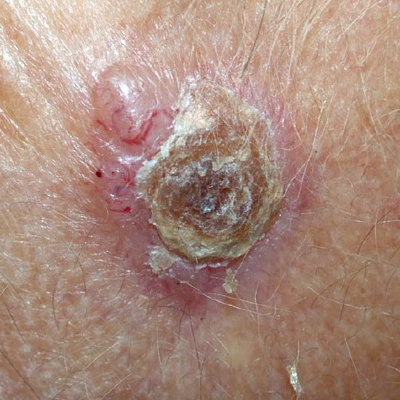
BCC example 1
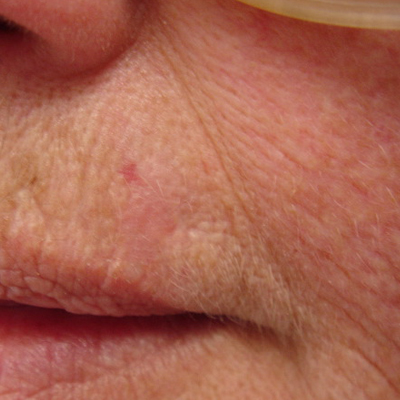
BCC example 2
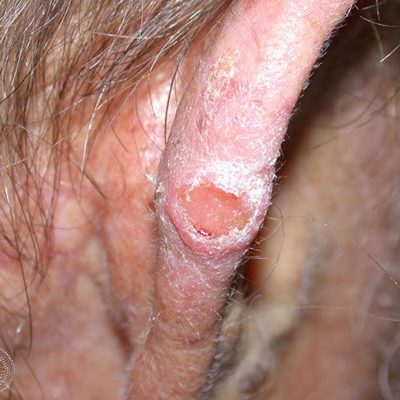
SCC example 1
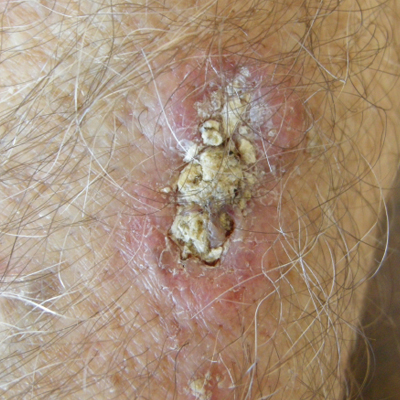
SCC example 2
Basal cell carcinoma
BCCs can appear as a slowly-growing, pale red or pearly smooth lump, usually on the face or neck. They have a tendency to ulcerate and bleed. They can also present as pink or red patches, most often found on the trunk and limbs.
Squamous cell carcinoma
SCCs often appear as a tender, raised nodule or as a scaly or crusted non-healing sore. SCCs are commonly found on the hands, forearms, ears, face, neck, or lower legs. SCCs on the lips and ears have a higher risk of spreading than other sites.
DermNet New Zealand’s website provides more images of both BCCs and SCCs.
There are rare forms of skin cancer not described here, such as Merkel cell carcinoma.
If you are concerned about any spot or lump, get it checked by a doctor as soon as possible.
Visit the Cancer Society of New Zealand for more information on skin cancer.
Read Stuff's August 2016 article 'Common lumps and bumps on and under the skin'.
This content has been reviewed by Dr Amanda Oakley CNZM MBChB PGDipHealInf FRACP FNZDS IFAAD on 17/06/2025

Be SunSmart
New Zealand can have strong levels of ultraviolet (UV) radiation. Learn how to keep safe while still living life in the sun.
Learn how